
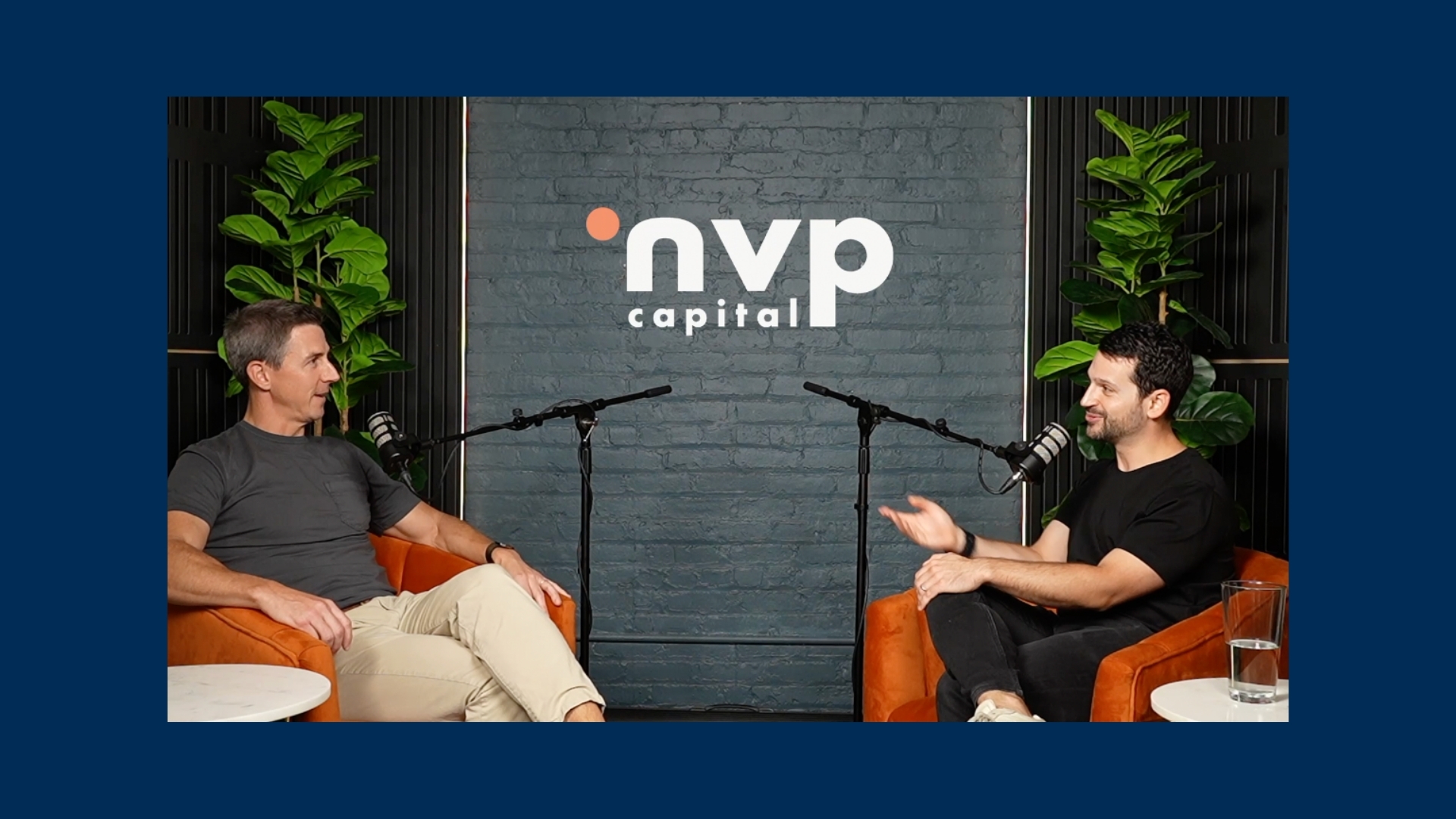

Key takeaways from this episode:
- Earned secrets beat market maps. Hetal started with a $35,000 lesson about missing displays.
- The shelf is still the least measured channel in commerce.
- The best supply network may already exist. Shoppers walk the aisles every day.
- A 120-day out keeps a B2B company honest.
- Second-time founders bring two things first-timers can’t: scars and a team.
Every brand that sells in a store shares one blind spot.
They know what shipped. Eventually, they know what sold. What happens in between, on the actual shelf, is mostly a guess.
Online, you can trace a sale back to a single click. In physical retail, a $1.5 trillion market in the US alone, most brands still find out about a missing display weeks after it has cost them.
On Between Two Quarters, we talk with the people who buy technology: operators who know what works because they’ve had to pay for it. David Roger is a rare guest because he has sat on both sides of the table.
At Felix Gray, the blue-light glasses brand he built into roughly 10,000 retail doors, David was the buyer. He needed a way to see what was actually happening on his shelves, and the solution he wanted didn’t exist. So he built it.
That company is Hetal. It’s a year old, an nvp capital portfolio company, and has already passed 200 customers.
That’s what an earned view looks like. It isn’t a thesis about a market. It’s a problem the founder has already paid to understand.
Felix Gray Was the Prologue
David has a habit of building companies out of problems he has lived firsthand.
After Cornell, he joined Venture for America and ended up in Las Vegas on Tony Hsieh’s $350 million Downtown Project. He spent 10 to 12 hours a day in Excel, modeling restaurants and bars. (Side quest: he built a hidden bar inside another bar. It has outlasted most startups from that era.)
His eyes started to hurt. So did his friends’ eyes, after the same long hours in front of screens in banking and tech. That became Felix Gray: blue-light glasses with clear lenses, in frames people actually wanted to wear.
It found product-market fit fast and grew into an omnichannel brand. Its push into retail is where Hetal’s story starts.
40% of the Displays Were Missing. It Took Nine Weeks to Find Out.
Felix Gray was in the middle of a national rollout with a major retailer. The team had spent more than $100 per display. The small test had gone well. The rollout didn’t.
The only signal was weekly sales data from their broker, and it was coming in light. Then friends started texting: the product wasn’t in the store, or it was hanging on a peg instead of on the display.
So they did what brands do. They paid a merchandising firm $35,000 to send people into stores. Each visit buys roughly 30 minutes of someone’s time and returns a few photos plus a CSV of survey answers you sort through yourself.
The answer: 40% of the time, the displays weren’t there. Neither was the inventory.
The finding was bad. The timeline was worse. It took eight to ten weeks to suspect a problem, six weeks to get someone into stores, and three more to get results.
David’s broker told him that’s just how it works. David saw something else: people are already in those aisles every day, doing their own shopping or someone else’s.
That’s an earned secret. You don’t find it on a market map. You pay $35,000 and wait nine weeks for it.
Use the Network That Already Exists
Hetal doesn’t hire a field force. It borrows the one that’s already walking the aisles.
Weekly shoppers, DoorDash and Instacart drivers, and in-store demo staff download the Hetal app. The store checks brands want are bundled into short sessions on a marketplace. A user reserves one, opens the camera in the store, and walks down the aisle. That’s it.
From there, Hetal’s computer vision pulls the right frame from the video and reads the shelf: what’s there, what’s missing, and whether the display and promotion are set. Brands act on it through Hetal’s merchandising and category-management software.
The price is about $2 per store per month. The old way cost $35,000 a sweep.
The cheapest data network is the one people are already walking through.
Why Now? (Three Things Lined Up)
Ideas like this have floated around for years. David’s view is that three things had to be true at once, and the Felix Gray team happened to have all three:
- They knew the buyer. They had been the brand with no idea what was on its own shelf.
- They knew consumer acquisition. Years of fighting rising online costs taught them how to recruit shoppers cheaply. This time, Hetal pays them.
- They knew the tech was ready. Phones from the last eight years shoot good-enough video, and vision models have been capable of the work for a couple of years.
The next step is visual language models, which can reason about an image rather than just label it. That takes Hetal from this product is here to what’s happening across the whole assortment, including what a competitor is doing in the next slot over.
This is what physical AI looks like in practice: models that see and understand the real world, fed by data that only people on the ground can capture. And as models get cheaper every quarter, the moat isn’t the model. It’s the data.
David’s Hot Take: Make It Easy to Leave
At Felix Gray, David was the customer for plenty of B2B software. He remembers the vendors who went quiet after the contract was signed, then resurfaced near renewal to remind him how great they were.
So Hetal puts a 120-day out in its contracts. If a customer isn’t getting value, both sides learn that early, and the team has to earn the account every quarter instead of once a year.
Felix Gray also gave him the bar to aim for. After weighing the options, his team concluded it would be irresponsible for an online seller not to be on Shopify. David wants Hetal to be that obvious for any brand on a shelf.
Confidence isn’t locking customers in. It’s letting them leave and betting they won’t.
A Hard Truth: The Market Doesn’t Lie
Ask David about the biggest mistake founders make, and he points to ego.
You can shout an idea from the rooftops, but if nobody is listening, something has to change: either the execution or the idea itself. As David sees it, the customer isn’t out to get you and isn’t there to be your friend. They’re there to use the product, so listen to them.
The same discipline shaped how Felix Gray spent money: every dollar had to return about four. Hetal’s customers think the same way, whether they’re a $10 million emerging brand or a $10 billion category leader. Nobody buys software for the sake of buying software anymore.
ROI isn’t a sales tactic. It’s the whole pitch.
Fearless at 26. Better at 34.
David started Felix Gray at 26 and Hetal at 34.
At 26, in his telling, you’re completely fearless. That’s the upside. The downside is that you think you’re always right, you don’t listen, and you pull the team in different directions. He had to learn how to be a good CEO.
At 34, he has scars, lessons, and people he has worked with for years who were ready to come along for the next ride.
That’s a big part of why nvp capital is founder-first. At seed, there’s rarely much data to underwrite. The founder is almost the whole story.
It’s also why we’ve built a thesis around backing repeat founders. Lived experience is hard to fake and impossible to shortcut. David didn’t read about missing displays in a market report. He paid for that lesson at Felix Gray, and Hetal is what he built with it.
First-time founders have something to prove. Second-time founders have something to show for it.
The Shelf Is the Last Untracked Channel
David describes Hetal as the Google Analytics for the shelf, with services built on top.
Marketing used to run on the old line about knowing half your spend works without knowing which half. Online attribution mostly fixed that, and even TV and billboards can be measured now.
The shelf is still dark. US in-store sales run about $1.5 trillion a year, and brands often don’t know whether their product is there, whether the promotion ran, or where the next marketing dollar should go.
Hetal started with emerging brands because they feel the pain most and buy fastest. The same need runs all the way up to the largest CPG companies. What changes with size is the workflow, not the problem.
The Real Insight
Every critical industry has its own version of “that’s just how it is.” Retail’s is a $35,000 audit and a nine-week wait to find out what’s on the shelf. The founders who break those patterns are usually the ones who’ve lived them, which is exactly who we want to back.
- Earned secrets beat market maps. A $35,000 audit and nine weeks of waiting taught David more than any TAM slide.
- Borrow the network that already exists. The shoppers were already in the aisles.
- Make it easy to leave. It keeps the team earning the business.
- The market doesn’t lie. Drop the ego and listen.
- The second time, bring your people. Scars compound.
We’re proud to back David and the Hetal team, and excited for what’s next.
Watch the full episode of Between Two Quarters below, and find more conversations on the nvp capital blog.
