

And Why “Pilot” Is Becoming a Dirty Word in Enterprise AI
Over the past few years, enterprise teams have moved quickly to experiment with AI. New tools, new pilots, new promises.
What’s been harder is turning that early momentum into something that actually scales across an organization.
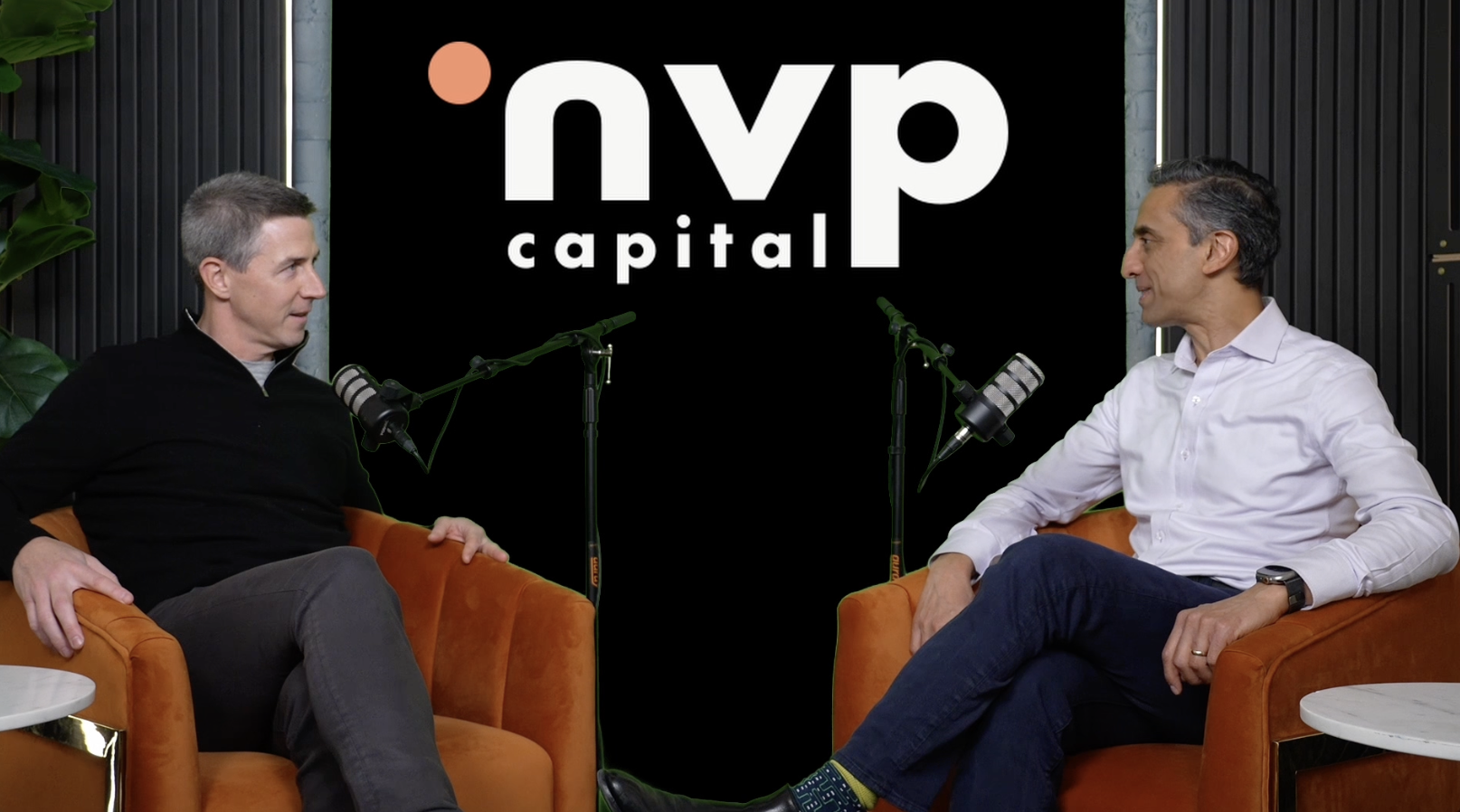
That tension sat underneath our entire Between Two Quarters conversation with Rishi Dave, Expert Partner at Bain & Company and former CMO at Dun & Bradstreet, Vonage, and MongoDB. Rishi has spent his career both buying enterprise software and advising companies on how sales and marketing actually operate at scale. Today, much of that work centers on AI.
What emerged wasn’t a story about tools or models, but about how enterprises are being forced to rethink process, ownership, and change itself.
From Experimentation to Re-Architecture
In the early days of generative AI, most companies did what they always do with new technology. They experimented.
Teams tested tools. Individuals ran pilots. Functional groups looked for quick productivity wins.
That phase is not over, but it is no longer where the most meaningful progress is happening.
According to Rishi, the companies starting to see real impact are stepping back and asking a harder question. If we were designing this workflow today with AI in mind, what would it look like?
That shift reframes enterprise AI from a set of tools into an operating model decision. Instead of starting with technology or data, these companies are starting with process, organizational design, and change management. Only then do they decide what technology belongs underneath.
This is especially true in vertical AI, where software has to map tightly to how work actually happens inside a specific industry or function.
Why End-to-End Thinking Matters
One of the strongest themes in the conversation was the danger of siloed AI adoption.
Content is a good example. Early AI adoption in marketing focused on helping individuals write faster or generate more material. But content does not live in isolation. It supports sellers. It reinforces brand. It moves through approvals, legal reviews, agencies, and distribution channels.
When only one step improves, the system does not.
What is changing now is that enterprises are starting to look at entire workflows. How content is created, approved, distributed, used by sales, and measured. AI becomes powerful not when it accelerates one task, but when it compresses the distance between insight and execution.
This same pattern shows up across sales, marketing, and revenue operations. AI delivers value when it is embedded end to end, not bolted onto a single function.
AI Is Shifting Who Has Power Inside Organizations
One of the most interesting insights from Rishi was how AI is changing who holds influence inside large organizations.
Historically, execution power sat in specialized silos. Social teams, web teams, analytics teams. The people who understood the customer journey best often had to work through layers of process to get anything live.
AI is changing that balance.
As execution becomes easier to automate, decision making is shifting toward the people with the deepest understanding of customers, differentiation, and messaging. These experts can now drive outcomes more directly, with fewer handoffs and fewer gates.
The result is not just faster work. It is better work, delivered with less organizational friction.
For enterprise AI to succeed, companies have to be willing to let that power shift happen.
How Enterprise AI Buying Is Evolving
AI is also changing how enterprises buy software.
Ownership is moving away from centralized innovation teams and pilots and toward functional leaders like CMOs, CROs, and revenue owners who are focused on demonstrated, long-term ROI. These leaders are under direct pressure to cut costs, improve productivity, and deliver measurable results.
As a result, enterprise AI buying decisions are becoming more tied to real workflows and real outcomes, not experimentation for its own sake.
This shift has created opportunities for AI startups, especially in newer categories and under digitized industries where large platforms have not fully caught up. Many enterprises recognize that the market is still early and are open to working with startups to explore what is possible.
At the same time, risk still matters. The AI startups that succeed are the ones that integrate into existing systems, reduce internal friction, and help buyers understand how work will actually change after adoption.
Founder Takeaways
- 1. Enterprises are done optimizing individual tasks.
AI adoption is moving from making one role faster to redesigning entire workflows. Founders selling point solutions should expect adoption to stall unless they can show how their product fits into a broader process. - 2. Expertise matters more than execution
AI amplifies people who understand customers, messaging, and journeys. Products that empower domain experts outperform tools that only automate labor. - 3. Change management is the real bottleneck
What consistently slows enterprise AI adoption is not the technology itself, but everything around it. Approval paths, incentives, ownership, and ways of working often stay the same even as new tools are introduced. Without addressing those structural pieces, AI improvements struggle to translate into real productivity or scale. Founders who design with organizational change in mind are far more likely to succeed. - 4. Pilots are losing their shine
As Rishi put it, “we’re starting to see pilots becoming a bad word.” Many enterprise buyers have invested heavily in pilots that never made it past a single team or use case. As a result, buyers are increasingly wary of isolated experiments and are instead looking for initiatives with executive alignment and cross-functional ownership that can scale across the organization. - 5. Awareness happens before the buying process
By the time an enterprise formally evaluates vendors, the shortlist is often already set. Category credibility and early visibility matter long before procurement enters the picture.
The Bottom Line
Enterprise AI adoption is not slowing down. It is becoming more serious.
The conversation has shifted from what AI can do to what organizations need to change in order to use it well. That is a harder conversation, but it is also where real advantage is being created.
For founders building in vertical AI, the opportunity is not just to sell software. It is to help enterprises bridge the gap between what AI makes possible and what organizations are actually ready to change.
To hear more of Rishi’s perspective on enterprise AI, vertical AI, and how buyers are actually navigating this shift, watch the full Between Two Quarters interview below – and if you’re a founder building in this space, we want to hear from you.
For more Between Two Quarters episodes, visit our content page or our YouTube Channel!
